Islamabad: Federal Minister for Investment Qaiser Ahmed Sheikh has underscored that regulatory clarity, predictability and strong institutional coordination are essential to attract both domestic and foreign investment into Pakistan.
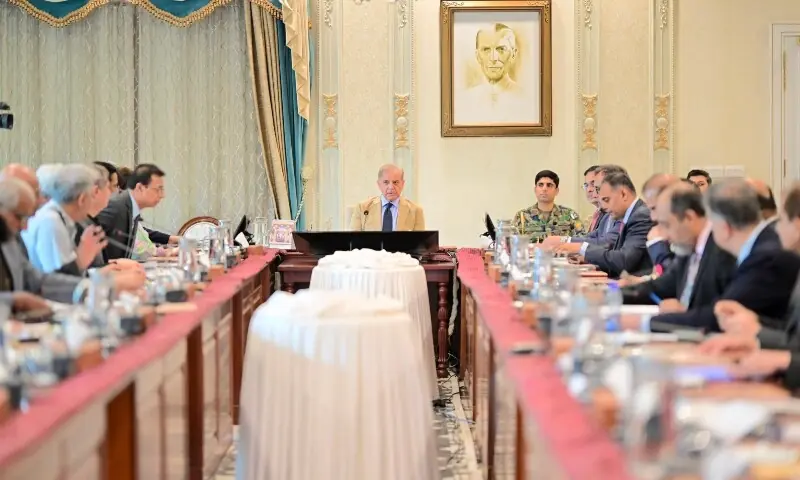
Speaking at the “Pakistan Governance Forum” on Wednesday, the minister chaired a high-level session titled “From Subsidies to Strategy: Delivering Competitiveness Through Reform.” He emphasised that structural reforms are vital for moving beyond short-term economic stabilisation toward long-term, sustainable growth.
The minister noted that Pakistan is transitioning from a subsidy-driven economic model to a strategy-led, competitiveness-based framework focused on export-led growth and value-added production. Moving up the value chain and enhancing value-added exports, he said, remain central pillars of the country’s economic transformation agenda.
Highlighting ongoing reform efforts, the minister elaborated on the work being undertaken by the Board of Investment under the Cabinet Committee on Regulatory Reforms (CCORR). He said multiple comprehensive reform packages have been introduced, with hundreds of measures currently at various stages of implementation. The overarching objective is to reduce regulatory bottlenecks, simplify compliance procedures and modernise outdated legal frameworks.
According to the minister, four key regulatory reform packages have been endorsed by CCORR. The first package comprises 57 reform proposals across 18 ministries, departments and authorities, generating estimated annual recurring cost savings of Rs36.80 billion. The second package, aimed primarily at streamlining federal Regulatory Legal Compliance Orders (RLCOs), is projected to deliver annual savings of Rs250.54bn.
The third package focuses on streamlining the opening of business accounts with commercial banks, transitioning district registries to a unified national corporate registry and reviewing the Companies Act for listed companies. This initiative is expected to yield annual recurring savings of Rs102.67bn.
Meanwhile, the fourth package seeks to establish a modern regulatory framework for venture capital in Pakistan, facilitate foreign exchange transactions to support cross-border economic activities and enhance overall regulatory ease. It is projected to generate annual savings of Rs10.364bn.
Mr Sheikh stressed that small and medium enterprises (SMEs) form the backbone of Pakistan’s economy and must be empowered through simplified regulations, improved market access and integration into export value chains. He also called for facilitation-oriented governance and urged the Federal Board of Revenue to prioritise business facilitation measures to strengthen investor confidence and accelerate economic growth.
Story by Amin Ahmed